

Web to Customer Registration Module For CRM

Web to Customer Registration Module for CRM
In the digital-first era, one of the most critical features of any CRM platform is its ability to capture leads and customers directly from the web. The Web to Customer Registration Module for CRM is designed to streamline the process of converting website visitors into registered customers. This module ensures that data captured through web forms is automatically stored, validated, and synced within the CRM without manual intervention. For organizations striving to reduce friction in customer acquisition, this module becomes indispensable.
Introduction to the Module
Traditionally, businesses relied on manual lead entry into CRM systems, which was not only time-consuming but also prone to human errors. The Web to Customer Registration Module eliminates this bottleneck by offering a fully automated pipeline that directly connects web forms with the CRM database. This module allows businesses to capture personal information, preferences, and consent seamlessly, creating a smoother onboarding journey for customers.
Core Features of the Web to Customer Registration Module
This module provides multiple features that empower businesses to effectively register and manage customers from web platforms. Features include customizable registration forms, multi-field validation, automatic lead classification, secure data storage, and direct mapping into CRM records. Businesses can also configure the module to send automatic confirmation emails, assign sales agents, or trigger nurturing workflows once a customer registers.
Customizable Registration Forms
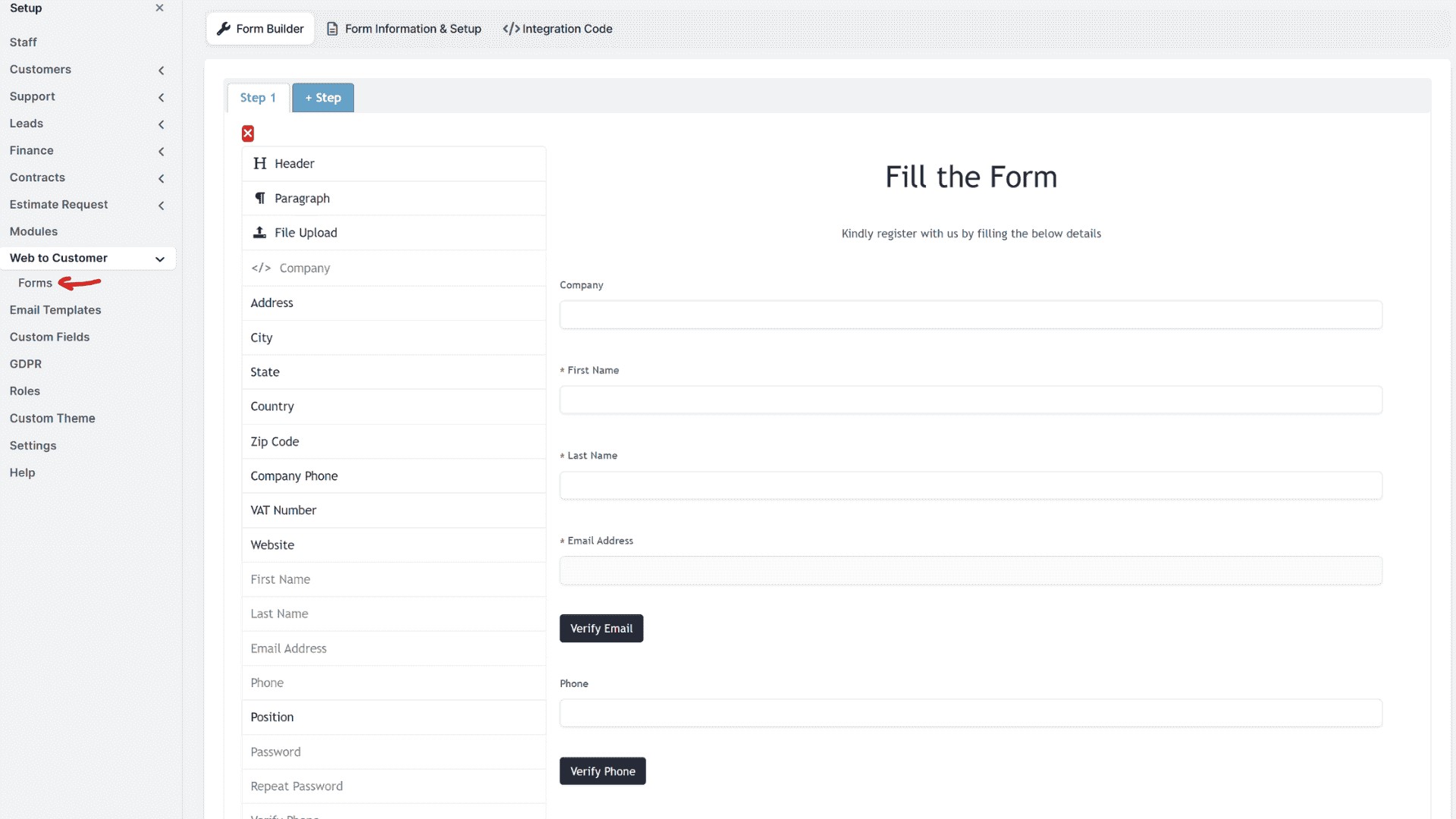
Every business has unique requirements for collecting customer data. The module offers drag-and-drop form builders that allow CRM administrators to design registration forms tailored to their industry. Fields such as name, contact information, preferences, or company details can be added with ease. Conditional fields and validation rules help ensure high-quality data entry. For example, businesses can enforce mandatory phone number formats or verify email addresses before submission.
Real-Time Data Capture and CRM Sync
A standout benefit of this module is real-time synchronization between the website and the CRM system. Once a visitor completes a registration form, the data instantly flows into the CRM database. This eliminates delays in lead entry and ensures that sales representatives can follow up immediately. Real-time integration helps improve conversion rates as businesses can respond to prospects while their interest is still fresh.
Data Validation and Compliance
Data accuracy and compliance with privacy regulations are non-negotiable in today’s environment. The Web to Customer Registration Module includes built-in tools for GDPR and CCPA compliance. Customers are presented with consent checkboxes, and the CRM maintains audit trails for regulatory purposes. Additionally, validation rules prevent duplicate entries, incorrect formatting, or incomplete submissions from polluting the CRM database.
Automated Workflows and Notifications
Businesses can configure the module to trigger workflows whenever a new customer registers. Examples include sending welcome emails, assigning leads to sales teams, or initiating customer onboarding sequences. Automated notifications ensure that no lead goes unnoticed, while integration with email and SMS platforms enhances engagement. For instance, a retail company can automatically send a discount coupon upon registration, encouraging customers to make their first purchase.
Security and Access Control
Since customer registration involves sensitive information, security is a primary concern. The module employs encryption protocols to protect customer data during transmission and storage. Role-based access control ensures that only authorized CRM users can view or edit registration details. Multi-factor authentication (MFA) adds an additional layer of protection to prevent unauthorized access.
Integration with Marketing and Sales Pipelines
Capturing customers is just the beginning; nurturing them through marketing and sales pipelines is what drives revenue. The module integrates seamlessly with marketing automation tools, enabling segmentation and targeted campaigns. Registered customers can be automatically placed into relevant sales funnels, scored based on engagement, and tracked for future conversions. This end-to-end integration reduces manual workload and increases ROI.
Analytics and Reporting
To optimize lead generation strategies, businesses need insights into how customers interact with registration forms. The module provides analytics dashboards displaying form completion rates, drop-off points, and demographic distribution. Reports can be customized to show the number of registrations per campaign, conversion rates, and customer engagement over time. These insights guide decision-making and help businesses refine their customer acquisition strategies.
Benefits of Using the Web to Customer Registration Module
The benefits are vast, ranging from increased efficiency to improved customer experience. Businesses enjoy reduced manual workload, faster response times, higher-quality data, and stronger compliance. Customers experience a smoother onboarding journey, which builds trust and loyalty. Ultimately, the module helps organizations grow their customer base while maintaining operational excellence.
Industry Use Cases
Different industries can leverage the Web to Customer Registration Module in unique ways. For example, educational institutions can use it to register prospective students for programs, while healthcare providers can onboard patients through digital forms. Retailers can capture shopper details for loyalty programs, and financial institutions can streamline client account openings. The versatility of this module makes it suitable for a wide array of business models.
Future Enhancements
As technology evolves, the module can be expanded with advanced features such as AI-powered form suggestions, chatbot-assisted registrations, and predictive analytics. Integrations with voice assistants and social media platforms could further extend its reach. By staying ahead of these trends, businesses can continue to deliver exceptional customer experiences while future-proofing their CRM systems.
Conclusion
The Web to Customer Registration Module for CRM is more than just a tool—it is a strategic asset for businesses aiming to convert website visitors into long-term customers. By combining automation, security, compliance, and integration, it streamlines the customer acquisition process while enhancing user experience. Organizations that adopt this module can expect to see improved efficiency, better data management, and stronger customer relationships, ultimately driving sustained business growth.
Build a Clear Roadmap to Online Growth

Build a Clear Roadmap
Optimize Your Strategy

Thrive with Data

Thrive with Data

Thrive with Data
Thrive with Data


