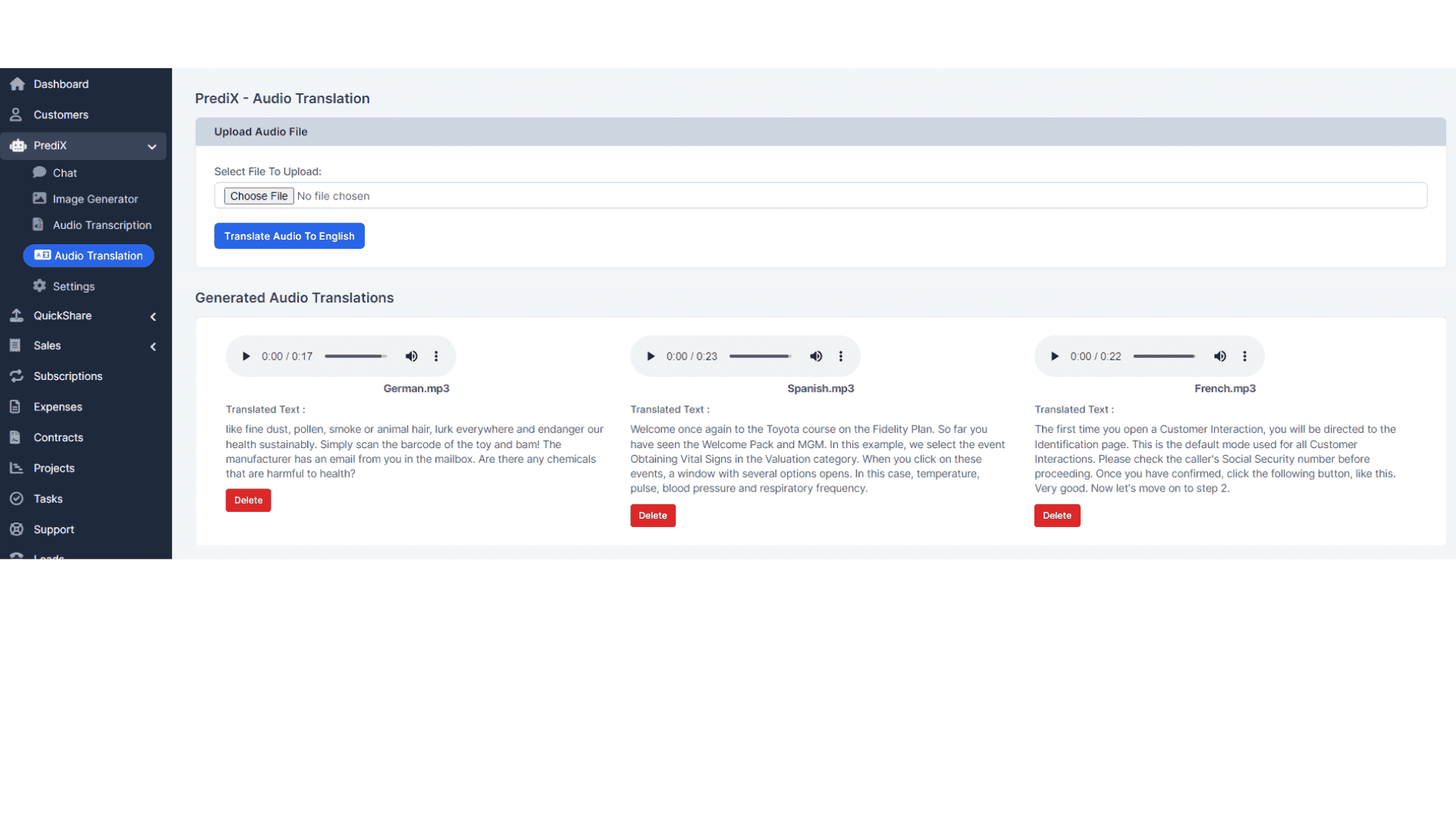
PrediX - AI Module For CRM

Predix AI Module for CRM: Turning Data into Predictive Customer Relationships
In a world where customers expect fast, personal, and predictive experiences, CRMs must evolve from passive data stores into intelligent engines that anticipate needs, prioritize action, and surface the next best step. The Predix AI Module for CRM is designed to do exactly that — it combines advanced machine learning, natural language processing, and business-aware automation to convert raw CRM data into prioritized signals, predictions, and contextual recommendations for sales, support, marketing, and operations.
What is the Predix AI Module?
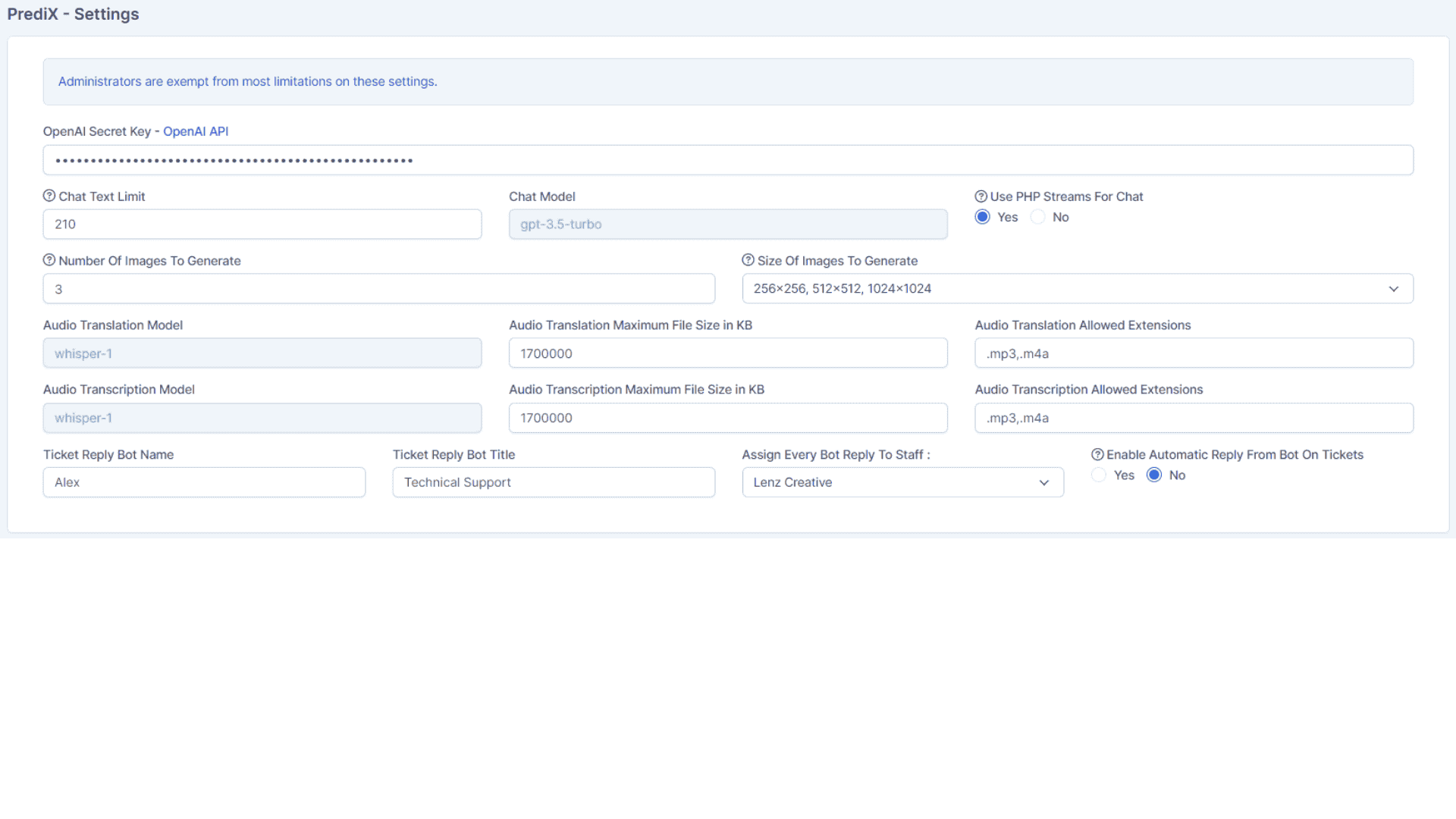
Predix AI is a modular, CRM-native artificial intelligence layer that integrates with contact records, deals, tickets, campaign data, and external data sources to provide predictive scoring, intent detection, conversation summarization, lead routing, churn prediction, and personalized outreach recommendations. Unlike black-box solutions, Predix AI is engineered for transparency, explainability, and business configurability so teams can trust, tune, and operationalize outcomes in daily workflows.
Why Add an AI Module to CRM?
Most CRM datasets already contain the signals needed to make smarter decisions — frequency of touch, sentiment in conversations, purchase cadence, support escalations, product use metrics, and campaign responsiveness. However, these signals are dispersed and rarely converted into prioritized work. The Predix AI Module centralizes signal extraction, applies predictive models, and turns outputs into actionable items: who to call next, which leads to nurture, which customers need intervention, and what message will likely resonate. This reduces wasted effort, shortens sales cycles, increases retention, and improves the ROI of every customer touch.
Core Capabilities
Predix AI delivers a broad set of capabilities that map to everyday CRM outcomes. Key features include:
Predictive Lead Scoring — Uses historical deal outcomes, firmographic and behavioral signals to estimate likelihood-to-convert, updated continuously as new data arrives.
Churn Risk Modeling — Combines support interactions, product usage trends, payment behavior, and NPS signals to surface customers at risk of attrition.
Next-Best-Action (NBA) Recommendations — Suggests the most effective action (call, email, WhatsApp, discount, demo) tailored to contact context and historical response patterns.
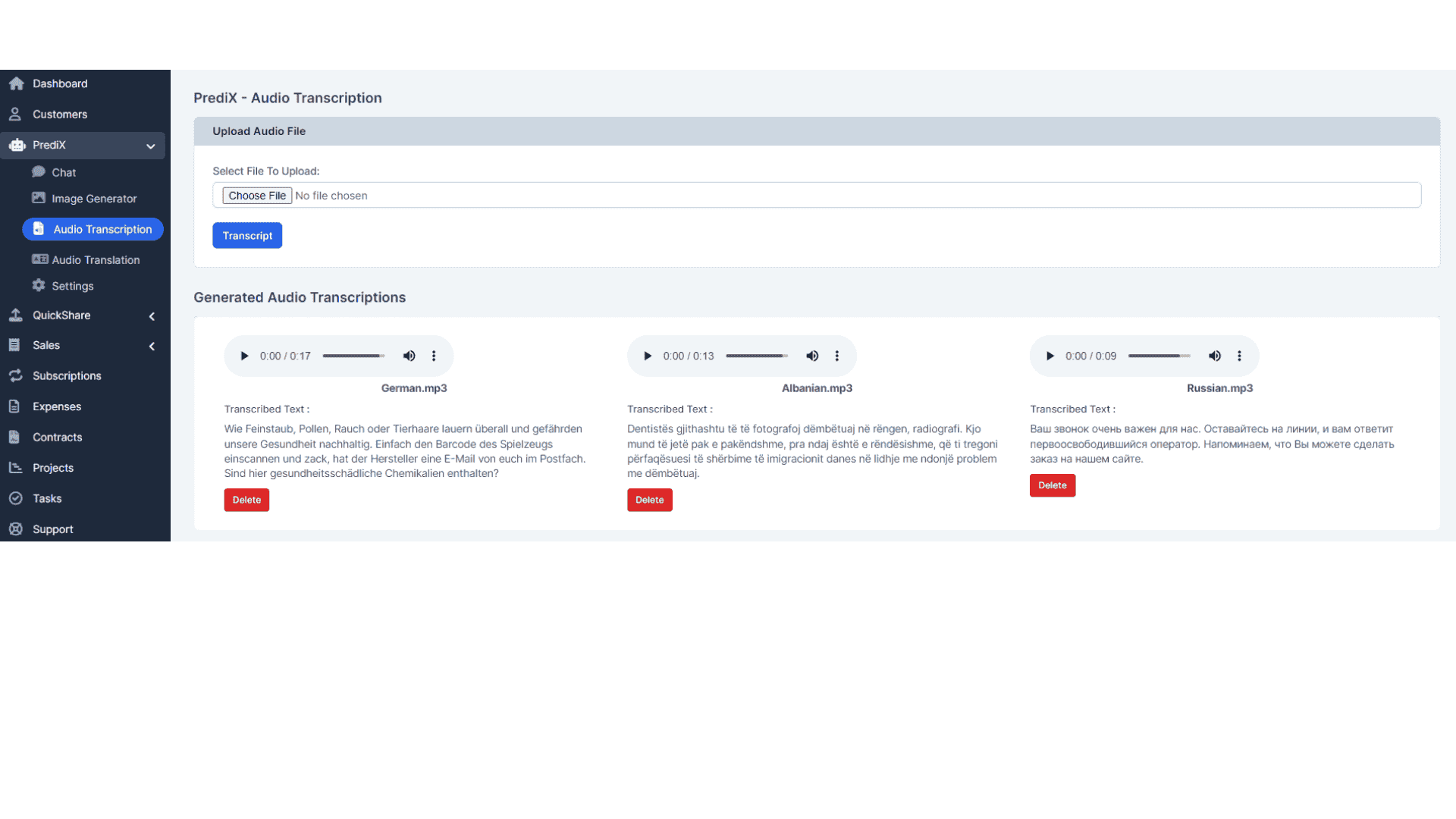
Conversation Intelligence & Summaries — Converts chat, voice, and email threads into concise summaries, sentiment scores, topics, and action items that attach to CRM records.
Intent & Topic Detection — Automatically tags inbound messages with detected intents (pricing, support, cancel, upsell) to speed routing and automation.
Predictive Account Routing — Dynamically assigns leads and tickets to the best agent based on skill, availability, historical success rate, and proximity to quota or KPIs.
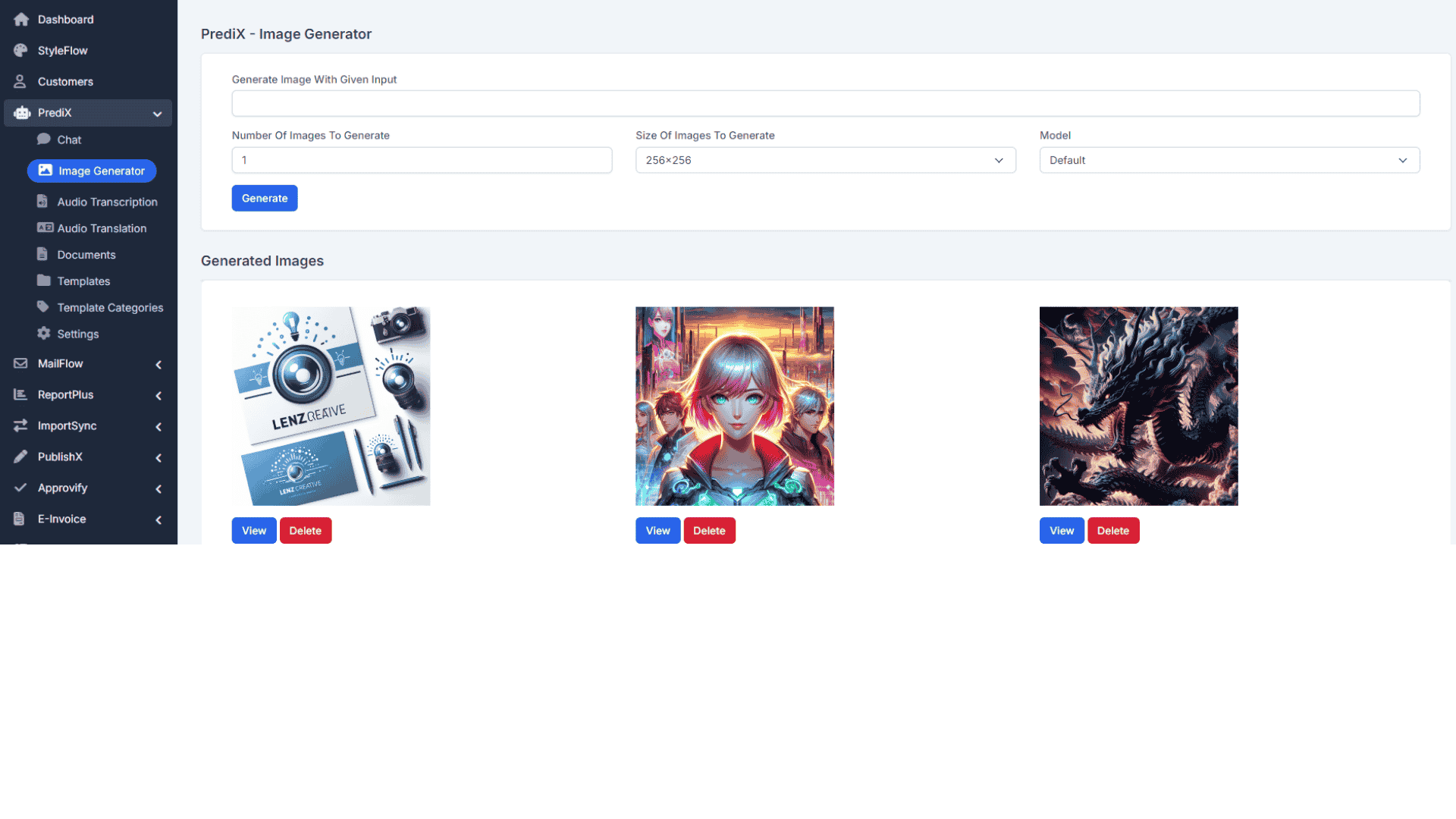
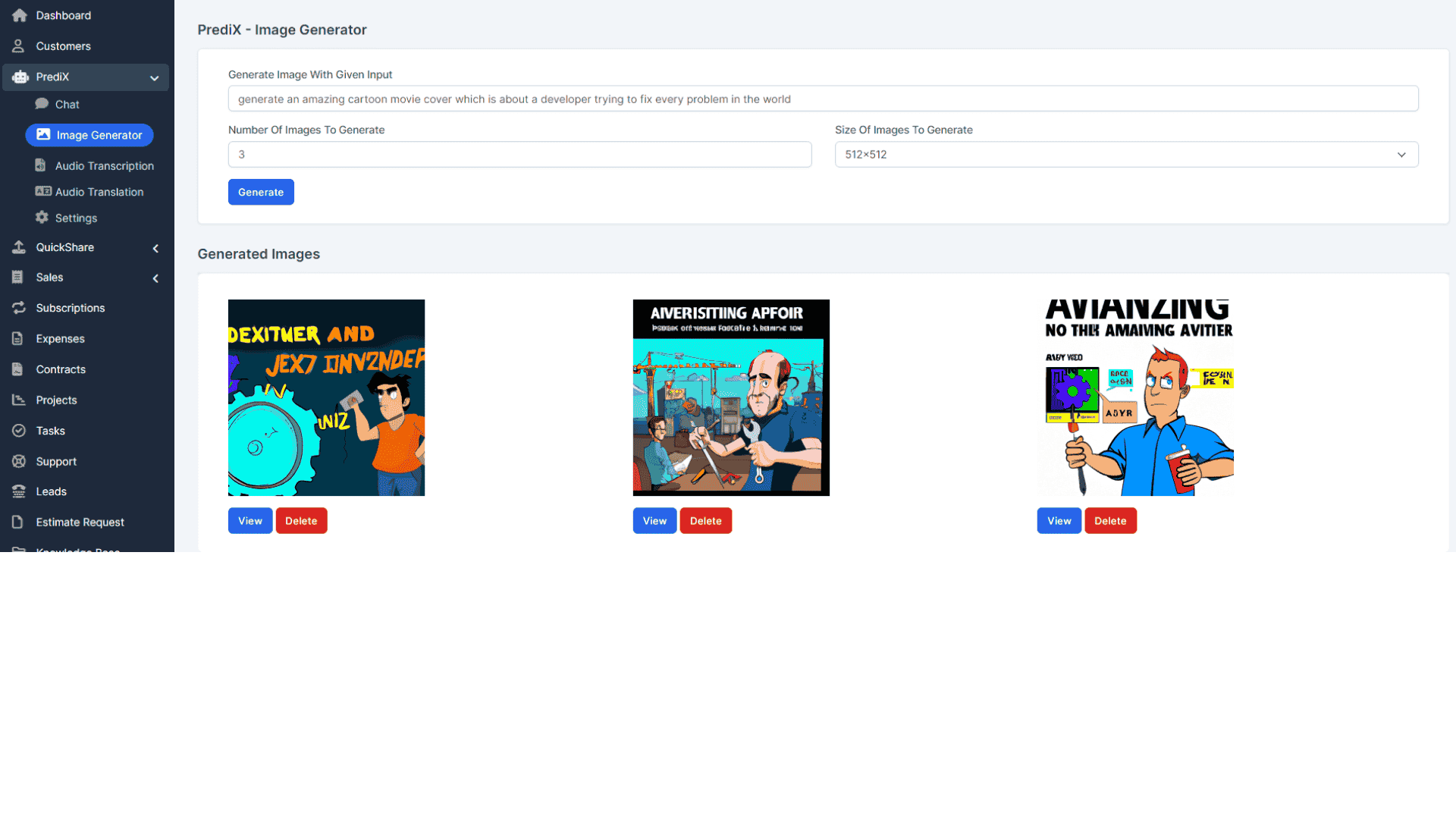
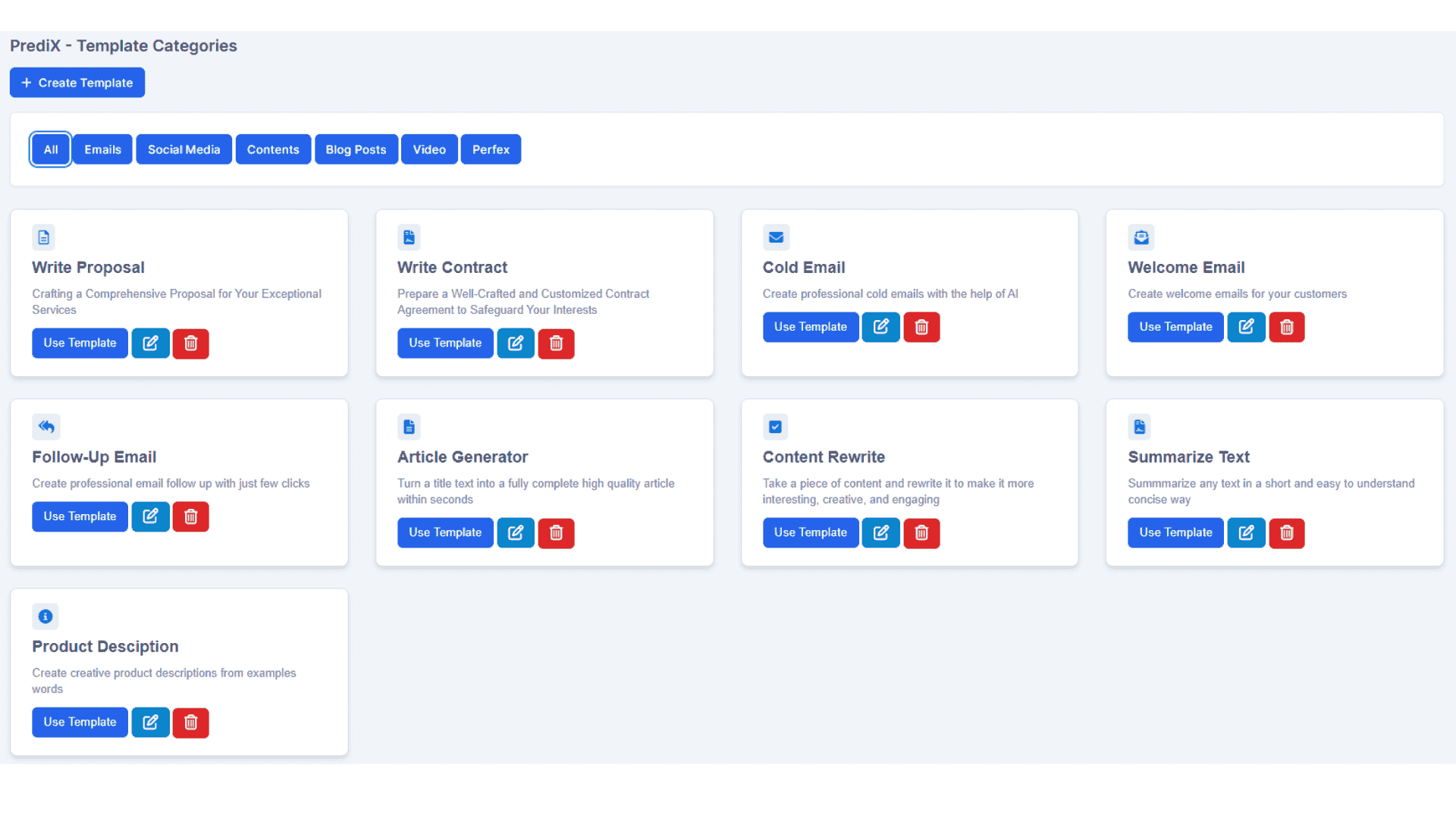
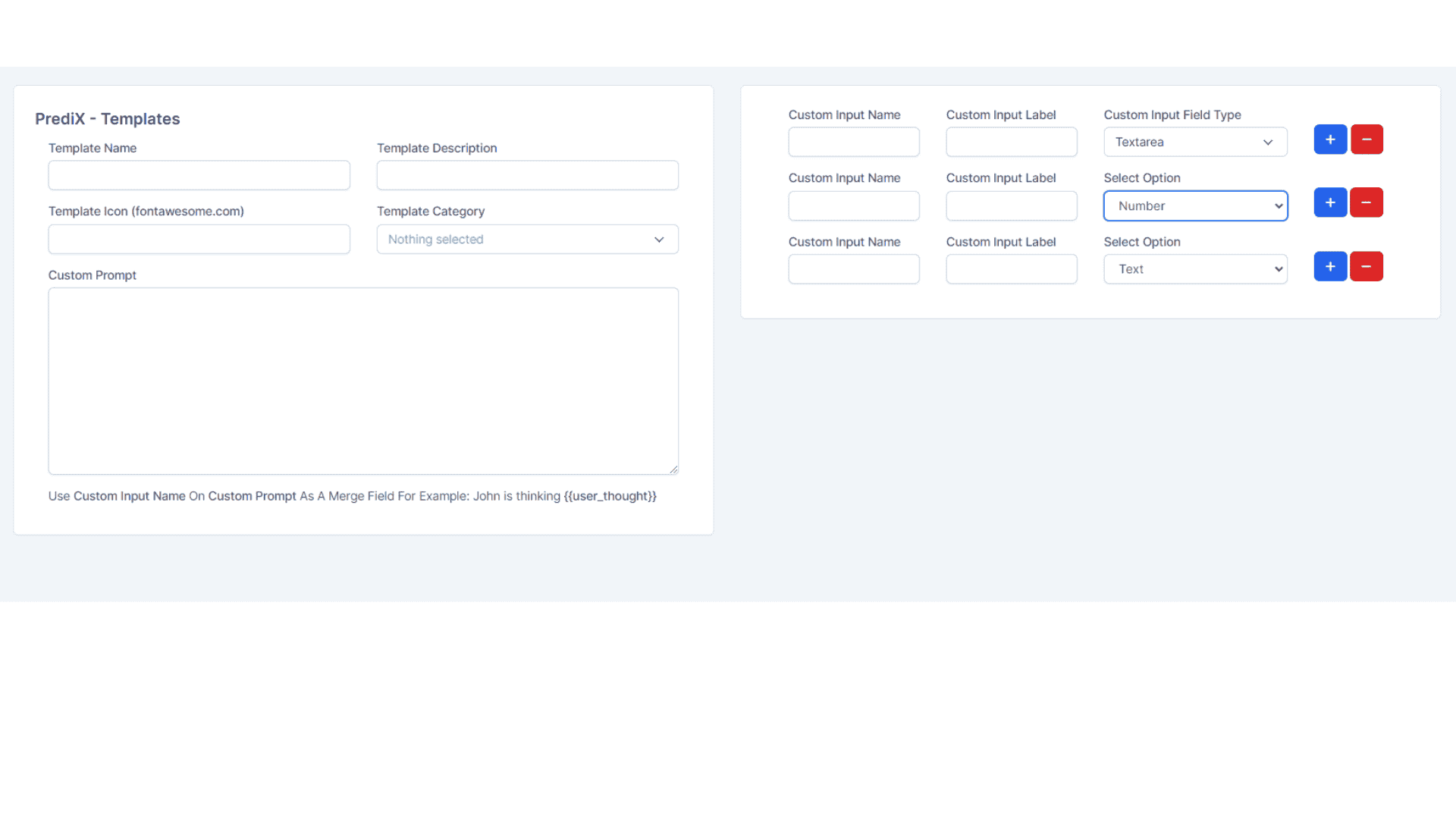
Personalization Engine — Generates message templates and variable suggestions that historically performed best for similar segments.
Anomaly & Fraud Detection — Flags unusual activity in orders, refunds, or login behavior that may indicate abuse or process failures.
Forecasting & Pipeline Health — Enhances sales forecasts by adjusting for predicted close probabilities, deal slippage risk, and product mix elasticity.
High-Level Architecture
Predix AI is architected as a combination of real-time inference services and batch model training pipelines, with a data orchestration layer that respects CRM ownership and governance. The module typically sits alongside the CRM application and integrates through secure APIs and event streams.
Key components include:
Data Ingest & Normalization: Collects CRM records, conversation logs, web events, product telemetry, and third-party enrichment (firmographic, intent data). Data is normalized into a canonical schema and versioned for auditing.
Feature Store: Stores engineered features (e.g., recency-frequency-monetary scores, rolling averages, sentiment indices) that serve both online and offline models.
Model Training Pipelines: Batch processes using historical labeled data (won/lost, churned/retained) that produce reproducible model artifacts and performance metrics. Pipelines include cross-validation, bias checks, and explainability reports.
Real-Time Scoring & Inference: Low-latency services that score records at event-time (lead created, message received) and push results into CRM as attributes or tasks.
Action Orchestrator: Rules and automation engine that turns predictions into workflows: create tasks, send templated messages, update stages, or start retention sequences.
Monitoring & Model Governance: Drift detection, fairness tests, feature importance dashboards, and model retraining schedules to ensure sustained performance.
Data Requirements and Privacy
Predix AI relies on diverse signals: CRM fields (contact, deal, ticket attributes), interaction logs (emails, chats, call transcripts), transactional history, product usage metrics, and optional enrichment sources. Data quality and historical labels (e.g., deals marked won/lost) are crucial for building accurate models.
Privacy and compliance are core considerations. Predix AI implements:
- Data Minimization: Only required features are persisted for modeling; PII is tokenized where possible.
- Consent Management: Models respect contact-level consent (marketing vs. transactional) and maintain audit trails for opt-ins/outs.
- Role-Based Access: Predictions and sensitive outputs are visible only to authorized roles; logs record who accessed what.
- Right to Explanation: Explainability artifacts (feature contributions) are attached to predictions to satisfy regulatory requirements in sensitive industries.
Modeling Approach & Explainability
Predix AI favors explainable models for front-line decisioning and uses more complex ensembles where appropriate for batch forecasting. The standard approach includes:
Baseline Models: Logistic regression or decision trees for initial transparency and fast iteration.
Ensembles: Gradient boosting or random forests for improved accuracy when explainability is augmented by SHAP or LIME explanations.
Neural Models: Sequence models or transformers for conversation understanding and intent classification.
Hybrid Setup: Use explainable models for real-time NBA and routing, and higher-capacity models for offline forecasts where human review is acceptable.
Every prediction is accompanied by top feature attributions and a human-readable rationale: “Lead scored 82% because recent product demo, company size matches high-value cohort, and email engagement is high.” This builds trust and makes recommendations actionable.
Practical Use Cases
Predix AI translates into measurable workflows across functions:
Sales Acceleration: Prioritized lead lists and suggested outreach templates reduce time-to-first-contact and improve conversion. Reps see “Top 10 leads likely to convert this week” with suggested subject lines and best contact times.
Customer Success & Retention: Churn alerts trigger health checks and proactive offers. For subscription businesses, Predix surfaces accounts likely to churn, recommends intervention steps, and predicts the offer likely to succeed.
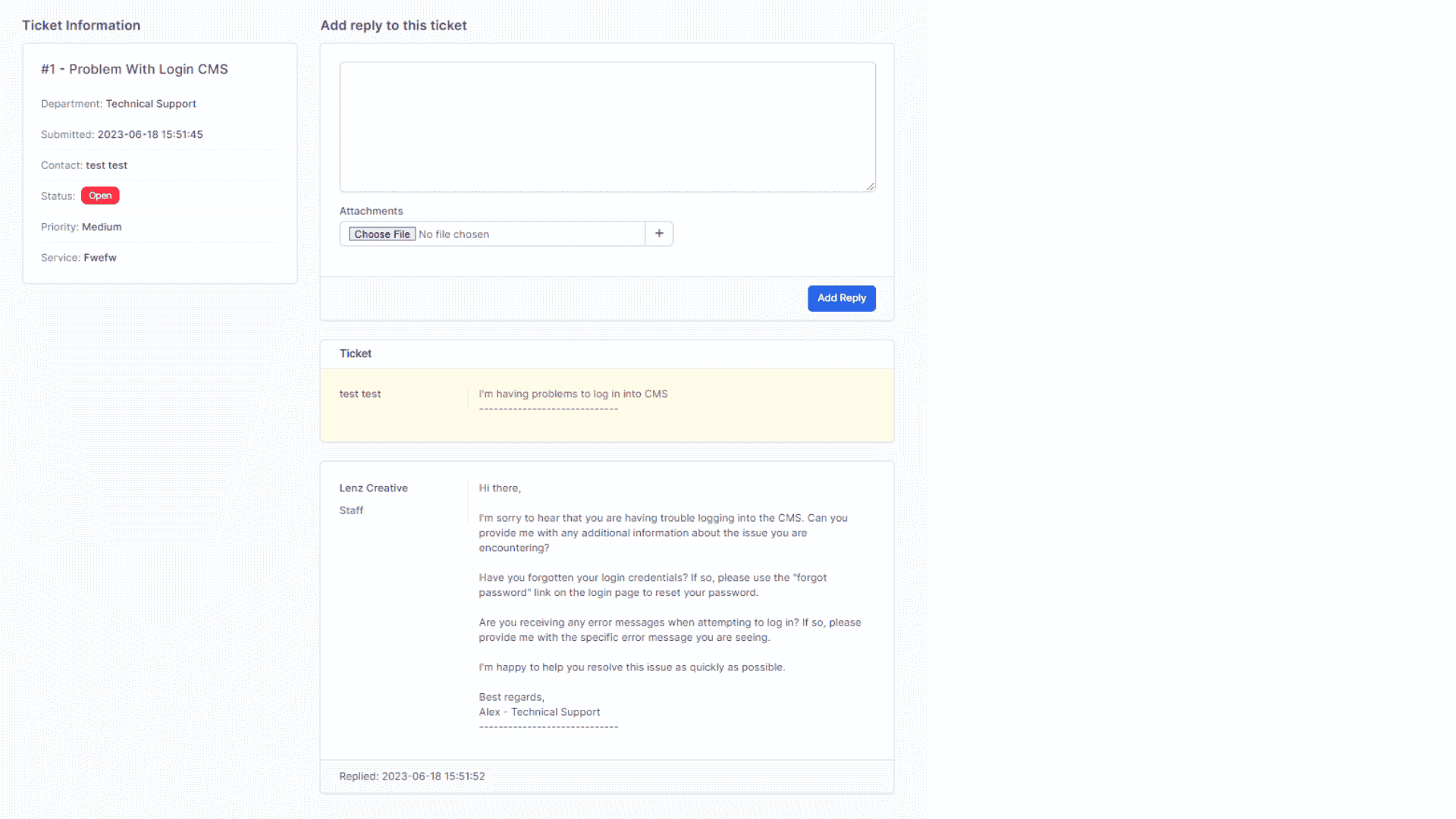
Support Triage: Intent detection routes urgent issues to specialized agents and auto-creates follow-up tasks. Sentiment trends identify topics causing escalations.
Marketing Optimization: Propensity models inform audience segmentation for campaigns, improving targeting and reducing wasted ad spend. Model outputs feed into A/B test designs and holdout strategies.
Revenue Forecasting: Models adjust pipeline probabilities based on signals beyond CRM stage—like product usage spikes, unresolved support cases, or competitor signals—resulting in more accurate monthly closes.
Conversational Summaries: After calls or chats, Predix stores short summaries and action items so no critical detail is lost during handoffs.
Integration Patterns
Predix AI integrates with existing CRMs via:
- Event-Driven Ingest: Webhooks and event streams feed changes (new lead, stage update, message) into Predix for immediate scoring.
- API Sync: Bidirectional APIs update CRM records with prediction fields and fetch CRM data for model features.
- Batch Jobs: Nightly feature runs and retraining jobs process large historical datasets for forecasting.
- UI Extensions: Inline widgets in contact and deal views show scores, rationales, and recommended actions so teams don’t leave the CRM environment.
- Automation Hooks: Predictions can trigger workflows—task creation, email sequences, SMS/WhatsApp nudges—through the CRM’s automation engine.
Implementation Roadmap
Rolling out Predix AI should follow a measured, value-driven approach:
Discovery & Data Audit: Map available data, label quality, missingness, and privacy constraints. Identify high-impact use cases (e.g., lead scoring vs. churn prediction).
Pilot: Build a narrow, explainable model for a single use case and measure uplift (conversion lift, time saved). Run a short pilot with a single sales or support pod.
Expand: Gradually rollout additional models (intent detection, NBA) and integrate into more workflows. Monitor performance and re-train on new labels.
Operationalize: Add monitoring, retraining schedules, drift detection, and stakeholder dashboards. Embed model outputs into incentives and OKRs where appropriate.
Govern & Iterate: Maintain governance controls for fairness, performance, and privacy; iterate models and feature sets based on real-world feedback.
Measuring Success & ROI
Success metrics vary by use case, but common KPIs include:
- Sales: conversion rate lift, reduced time-to-close, average deal size increase, rep productivity (calls/emails per closed deal).
- Support: first response time reduction, ticket resolution speed, escalation rate, CSAT improvement.
- Retention: churn rate reduction, extension/renewal rate, LTV uplift.
- Marketing: CTR/CR improvements for targeted campaigns, CAC reduction, and improved ROAS.
- Operational: automation rate, manual task reduction, and improved data hygiene.
Baseline A/B tests and holdouts are critical—measure lift versus control groups to prove incremental value. Financial ROI calculations should account for model maintenance, data engineering, and change management costs.
Explainability, Trust & Human-in-the-Loop
For AI-driven recommendations to be adopted, users must understand and trust them. Predix AI includes:
- Feature Attributions: Top contributing features shown with weights.
- Counterfactuals: “If X changes, score moves from 45% → 61%” helps reps know what actions matter.
- Feedback Loop: Agents can accept/reject recommendations, providing labels for retraining and improving model quality.
- Human Overrides: Supervisors can override automated routing or NBA decisions and provide reasons for audits.
Ethics, Fairness, and Bias Mitigation
AI models can inadvertently learn bias from historical data. Predix AI incorporates fairness checks, demographic parity analyses (where legally permitted), and bias mitigation strategies. Sensitive features can be excluded or treated carefully, and model performance is monitored across cohorts to ensure no group is unfairly disadvantaged.
Security and Regulatory Considerations
Security is paramount. Predix AI enforces encryption in transit and at rest, secure key management, role-based access, and comprehensive audit logging. For regulated industries (finance, healthcare), Predix supports deployment patterns that keep PII and models within approved environments (on-premises or private cloud), and provides the documentation necessary for compliance reviews.
Operational Challenges & How to Overcome Them
Common challenges include data quality, organizational adoption, model drift, and integration complexity. Best practices to address them:
- Start small and prove value quickly with high-impact pilots.
- Invest in data engineering and a feature store to avoid one-off feature pipelines.
- Provide intuitive UI affordances and explainability to drive trust.
- Automate monitoring and retraining rather than relying on manual checks.
- Engage change management: training, clear SOPs, incentive alignment.
Hypothetical Case Study: B2B SaaS
A B2B SaaS company implemented Predix AI for lead scoring and churn prediction. After a 12-week pilot, prioritized leads had a 28% higher conversion rate than control. Churn alerts allowed the customer success team to proactively intervene, reducing monthly churn by 15% in high-risk cohorts. Forecast accuracy improved, enabling finance to optimize cash flow planning. Key to success was integrating product usage telemetry with CRM pathways and running weekly model refreshes based on new labels.
Roadmap & Future Enhancements
The Predix roadmap includes continuous improvement areas:
- Federated Learning: enabling model improvements across organizations without sharing raw data.
- Real-time Personalization: micro-segmentation and content personalization delivered on every web and in-app touch.
- Voice & Multimodal Understanding: richer summaries from calls, screen shares, and documents.
- Deeper CRM Automation: automated negotiation suggestions, dynamic pricing nudges, and adaptive playbooks based on outcome signals.
Getting Started: Practical Steps
To adopt Predix AI, organizations should:
1. Identify 1–2 measurable use cases (lead scoring, churn).
2. Audit and prepare data; ensure labels and consent are in place.
3. Run a focused pilot with clear success metrics and a holdout group.
4. Build UI integrations and feedback loops for reps and agents.
5. Establish monitoring, retraining cadence, and governance.
Conclusion
The Predix AI Module for CRM transforms a traditional CRM into a predictive, proactive system that helps teams do the right work at the right time. By turning dispersed signals into prioritized actions, explainable predictions, and automated playbooks, Predix helps organizations shorten sales cycles, retain more customers, and run CRM operations with greater precision. The key to success lies in good data, transparent models, and strong operational integration — and when those are in place, AI becomes a multiplier for every customer-facing team.
If your organization is ready to move from reactive CRM processes to a predictive, AI-driven customer engagement model, Predix AI provides a practical, governed, and business-centric path to that future.
Build a Clear Roadmap to Online Growth
Build a Clear Roadmap
Optimize Your Strategy
Thrive with Data
Thrive with Data
Thrive with Data
Thrive with Data